No matter what product or service you sell, SustainZone helps you calculate, understand and communicate its carbon footprint so customers and buyers can see your sustainability impact clearly.
A carbon footprint is the amount of greenhouse gas emissions linked to a product, service or business activity. It is usually measured as carbon dioxide equivalent, shown as CO₂e.
For a product, this can include emissions created by raw materials, manufacturing, energy use, packaging, transport and other relevant stages in the product journey.
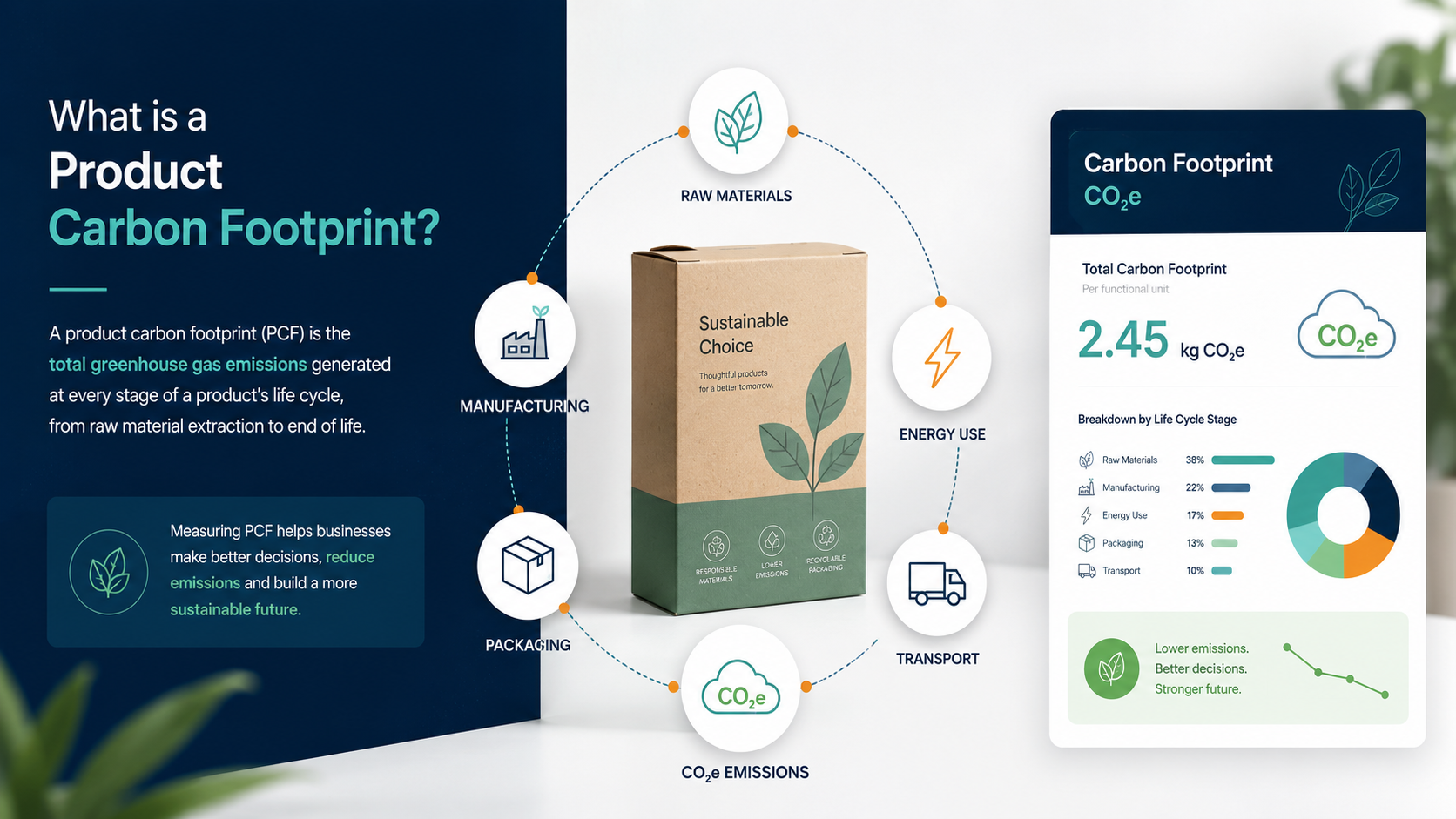
Customers and buyers are becoming more careful about sustainability claims. A product carbon footprint gives your business a clear, evidence based way to explain environmental impact, build trust and identify where improvements can be made.
Give customers clear information about your product instead of relying on vague sustainability statements.
If a product costs more because it uses lower impact materials or cleaner production, the footprint helps explain why.
Use the result to support customer enquiries, supplier forms, tender questions and sustainability evidence requests.
Identify whether materials, production, packaging, energy or transport are creating the biggest impact.
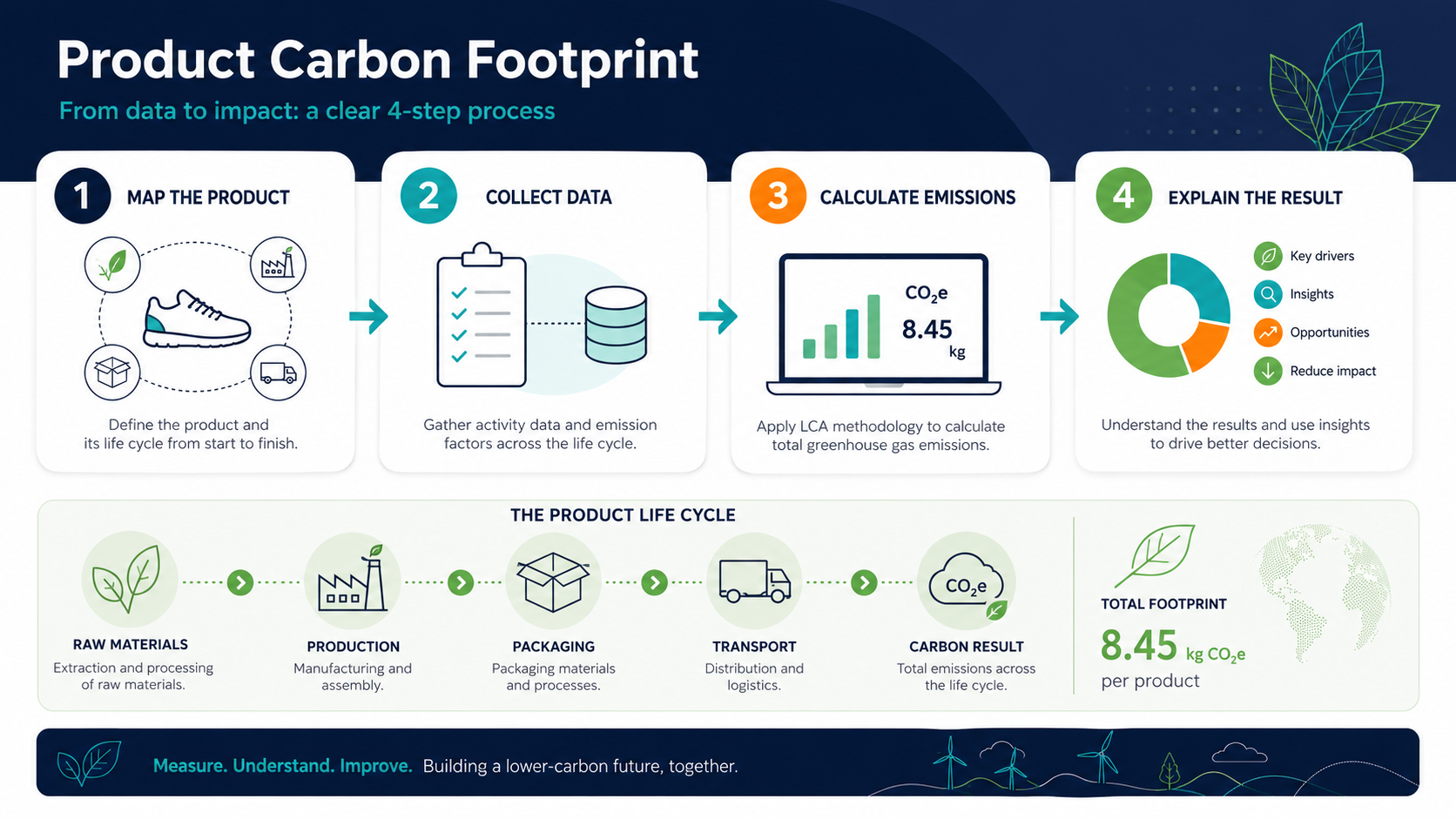
We review the product journey, collect available data and calculate the footprint using recognised carbon accounting principles, published research, emissions factors and transparent assumptions.
We understand what the product is made from and how it is produced.
We review materials, energy, packaging, transport and supplier information where available.
We use suitable emissions factors and published methods to estimate the product footprint.
We provide a clear result, assumptions, hotspots and improvement opportunities.
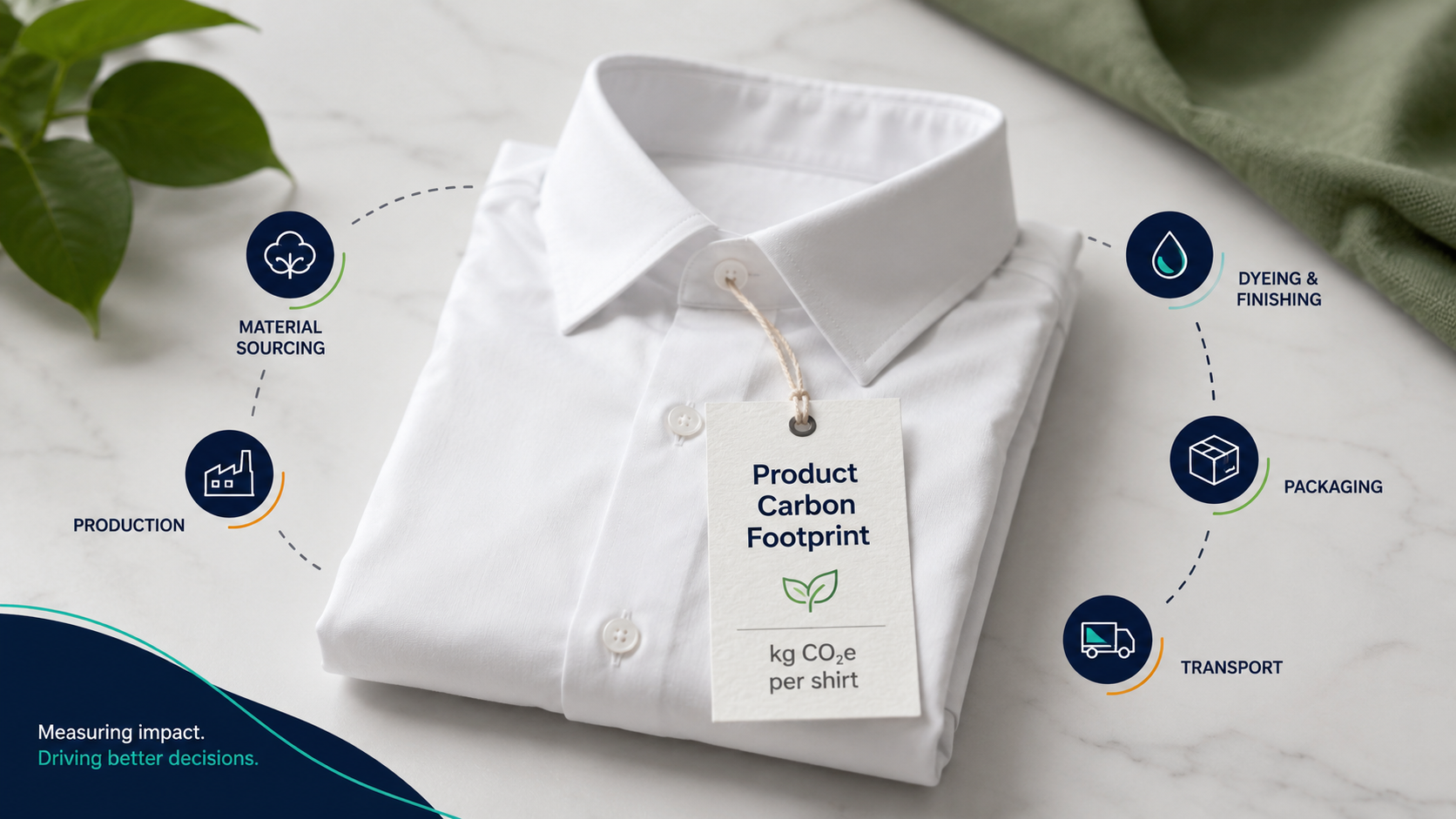
Imagine two shirts. They may look similar on the shelf, but their carbon footprints may be very different.
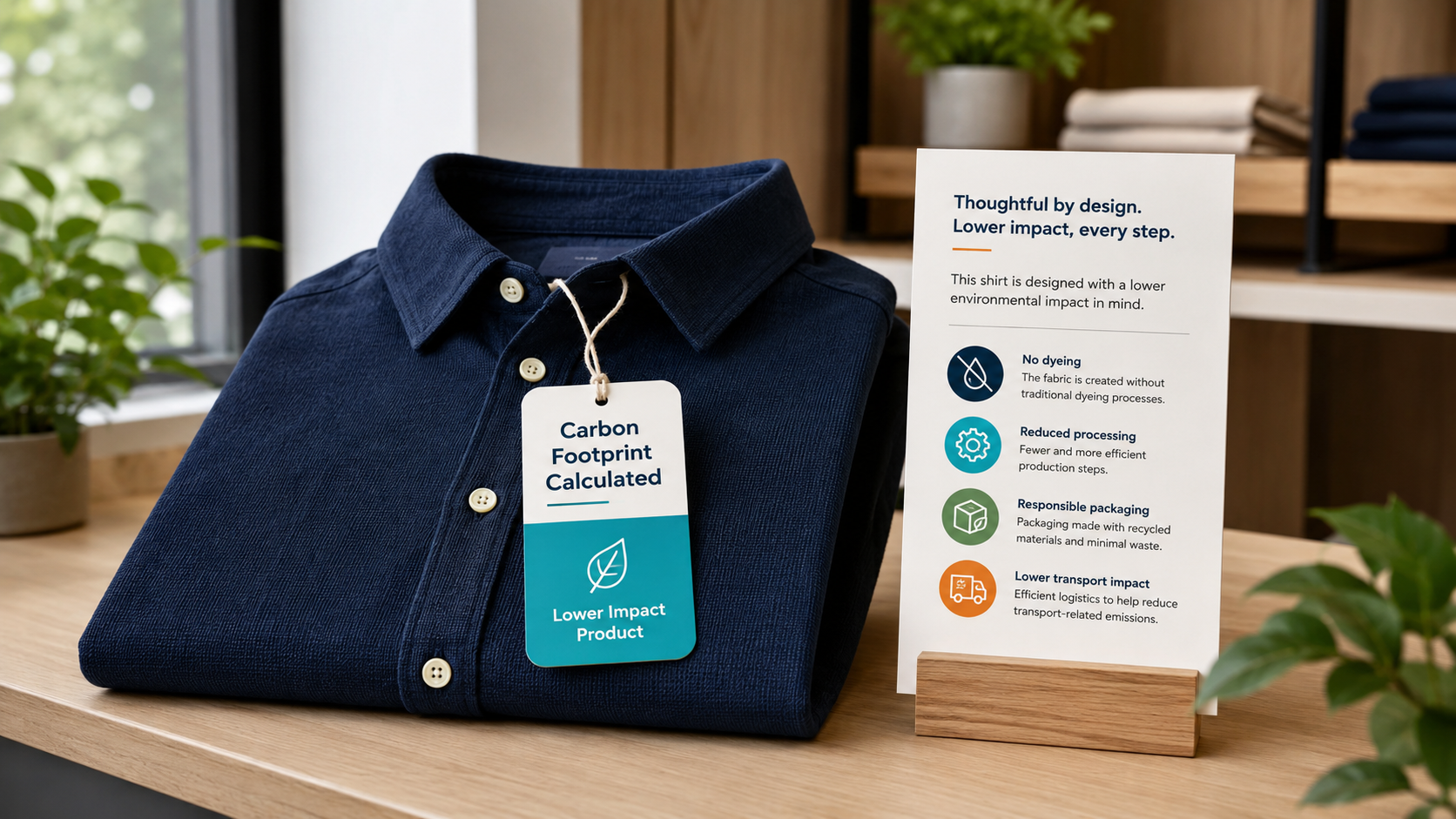
One shirt may use conventional materials, dyeing, high energy processing, heavier packaging and long distance transport. Another shirt may use lower impact materials, no dyeing, reduced processing, lighter packaging and more efficient production.
SustainZone helps calculate the footprint behind the shirt and explains what contributes to the result. This gives the business a clear way to show why the product may have lower impact and why it may carry more value than a regular alternative.
The footprint depends on the product data available, but for a shirt we would usually look at the main lifecycle stages that create emissions.
This shirt has a lower carbon footprint because it uses lower impact materials, avoids unnecessary dyeing, reduces processing emissions and uses responsible packaging.
The result helps customers understand why the product has more value than a standard alternative.
A carbon footprint does not just give your product a number. It gives your product a clearer story.
Instead of only saying a product is sustainable, your business can explain what has been measured, what has been reduced and why the product has a lower impact.
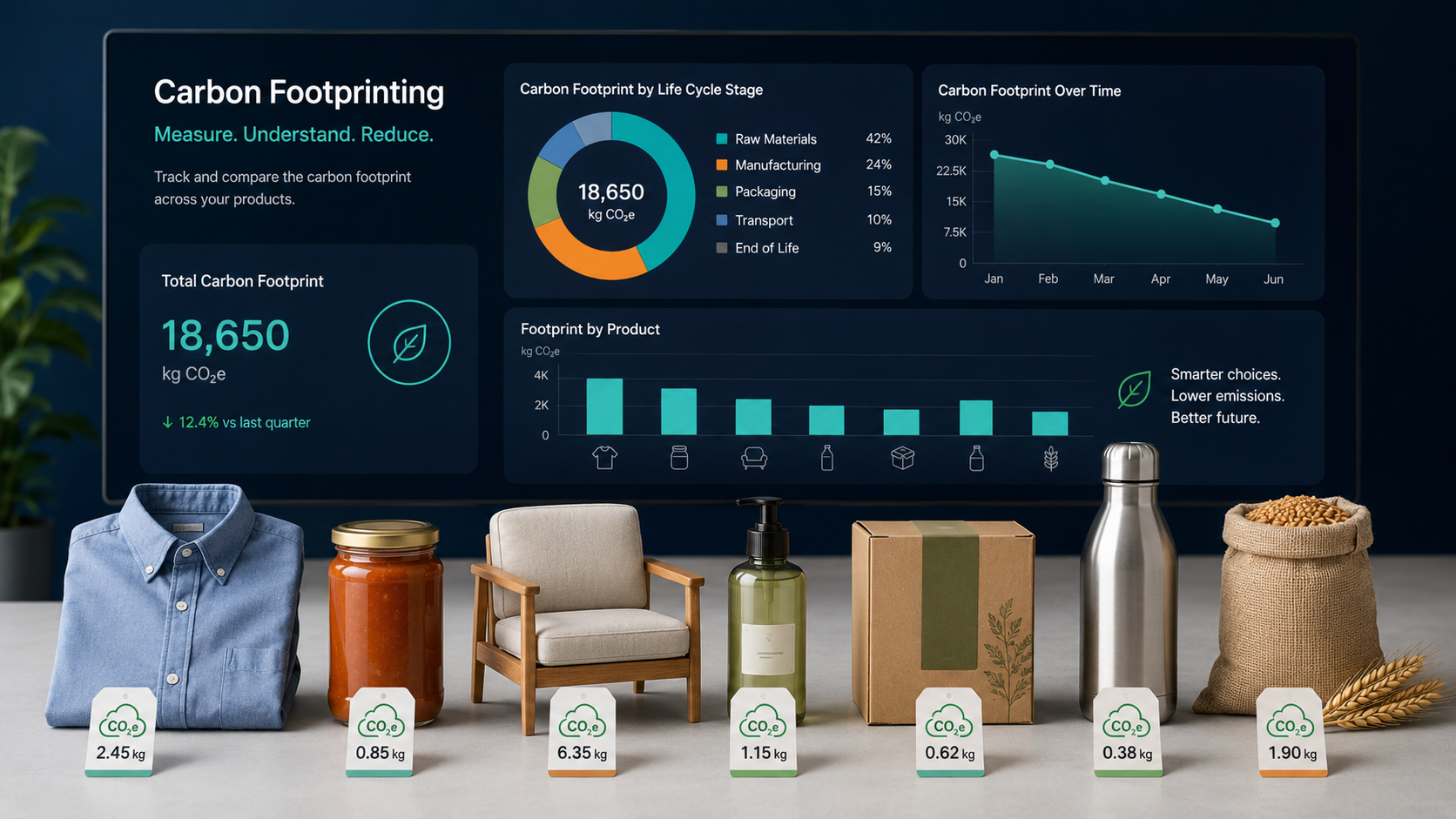
The shirt is only one example. SustainZone can apply the same process to many products and services by reviewing the relevant materials, production stages, packaging, transport and operational data.
No matter what you sell, the goal is the same. Know the carbon number behind your product and use it to build customer trust.
For businesses that want to calculate the footprint of one product or product range, including materials, production, packaging and transport.
For businesses that want to understand emissions linked to operations, energy use, fuel, vehicles, waste, packaging and supplier activity.
For businesses that need clear carbon evidence for customers, buyers, tenders, supplier questionnaires or sustainability pages.
Start with a SustainZone carbon footprint check and turn your product or business data into clear sustainability evidence for customers, buyers and future growth.
Book a Carbon Footprint Consultation