

Regulatory readiness
Prepare emissions records, carbon reduction plans and reporting structures for aviation specific and wider ESG obligations.

SustainZone helps aviation organisations measure emissions, identify high impact areas, improve supplier data, prepare for reporting obligations and build credible decarbonisation pathways.
Scope 1, 2 and 3
Carbon inventory and supplier emissions structure.
CORSIA and SAF
Support for aviation specific reporting and fuel transition planning.
Board ready
Clear outputs for tenders, ESG reports and strategic decisions.
The challenge
Aviation organisations face rising expectations from regulators, customers, investors and supply chain partners. The challenge is to turn scattered operational data into clear carbon intelligence.
We combine carbon accounting, supplier engagement, digital reporting and practical reduction planning so aviation teams can move from compliance pressure to measurable progress.
Aviation impact is not only direct fuel combustion. A stronger strategy also considers non CO₂ impacts, ground operations, purchased goods and services, capital goods and passenger surface access where relevant.
Market pressure
The sector needs transparent reporting, credible claims and practical reduction plans that can be understood by boards, regulators, passengers and procurement teams.
Prepare emissions records, carbon reduction plans and reporting structures for aviation specific and wider ESG obligations.

Communicate carbon performance clearly and avoid weak sustainability claims by backing statements with traceable evidence.

Help business travel, cargo and supplier partners access emissions data that supports their own Scope 3 reporting.
SustainZone method
Our service can support aviation teams at different maturity levels, from first carbon baseline through to supplier dashboards, SAF planning and reduction tracking.

Build a clear emissions inventory across operational activities, purchased energy, goods, services, travel and other material categories.

Model fuel related emissions, compare transition scenarios and communicate the impact of SAF adoption with transparent assumptions.

Translate data into reduction plans, supplier actions, board summaries, ESG content and tender ready evidence packs.
Ongoing development
SustainZone and i Cost are developing a digital carbon modelling and MRV dashboard concept to support airports and aviation supply chains with better Scope 3 decision making.
The platform is designed to bring supplier inputs, emissions activity, reduction opportunities and progress tracking into one central view. It helps airport teams identify high impact areas, improve supplier engagement and prioritise practical carbon reduction actions.
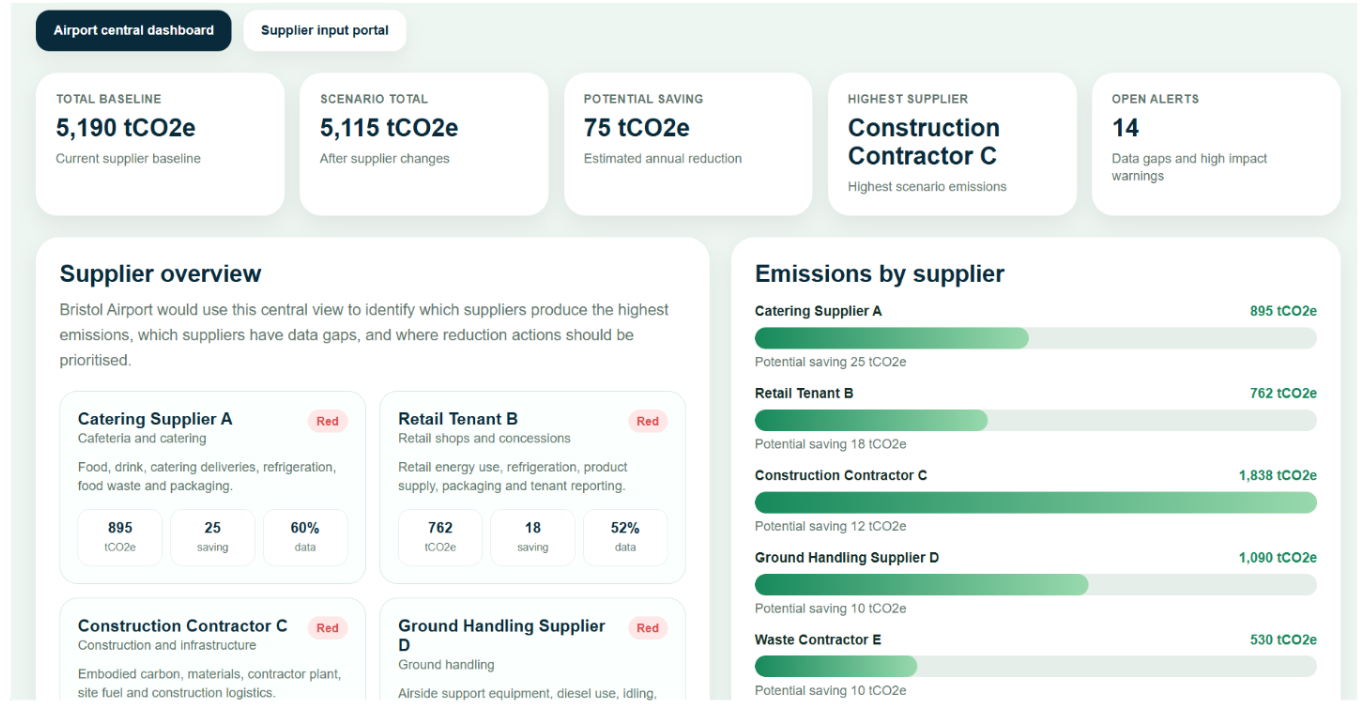
Sample prototype screen. This view currently focuses on the supply chain element of Scope 3 emissions and uses illustrative data only.
Impact view
SustainZone helps replace static annual estimates with structured evidence, clearer ownership and practical reduction tracking.
| Area | Traditional approach | SustainZone approach |
|---|---|---|
| Emissions tracking | Annual or quarterly estimates with limited granularity. | Structured tracking by activity, supplier and operational category. |
| Supplier data | Email based requests with inconsistent responses. | Defined supplier templates, category logic and hotspot visibility. |
| SAF planning | Isolated procurement decisions. | Scenario modelling with lifecycle emissions assumptions and reporting notes. |
| Compliance | Reactive reporting close to submission deadlines. | Evidence led reporting aligned with board, ESG and tender needs. |
| Decision making | Limited link between carbon data and operational action. | Action plans tied to measurable categories and responsible teams. |
Illustrative lifecycle emissions reduction potential under different SAF blend assumptions.
Aviation decarbonisation normally needs multiple interventions, not a single solution.
Why act now
The organisations that understand their emissions today will be better placed to win contracts, satisfy reporting requirements and demonstrate responsible aviation leadership.
Maintain better evidence for current and emerging sustainability requirements.
Respond to carbon and ESG questions with stronger data and clearer commitments.
Understand which procurement categories and suppliers create the biggest impacts.
Move from headline targets to realistic changes in fuel, energy, operations and procurement.
We support airports, airlines, corporate aviation teams and aviation suppliers with carbon measurement, reporting, supplier engagement and reduction planning.
Operational emissions, Scope 3 supplier mapping, passenger access and procurement hotspots.
Route level emissions, fuel scenarios, SAF assumptions and customer reporting support.
Carbon reduction plans, tender evidence, product footprints and buyer ready reporting.
